




FF&E Procurement from China: Hotel and Villa Packages in One Shipment
What FF&E procurement covers, where it stops, and how hotels, resorts and villa projects source furniture, lighting and sanitary ware from one Foshan factory group — with real freight, tariff and compliance data for 2026.

Ivana Li
George Group · Senior Sales Director
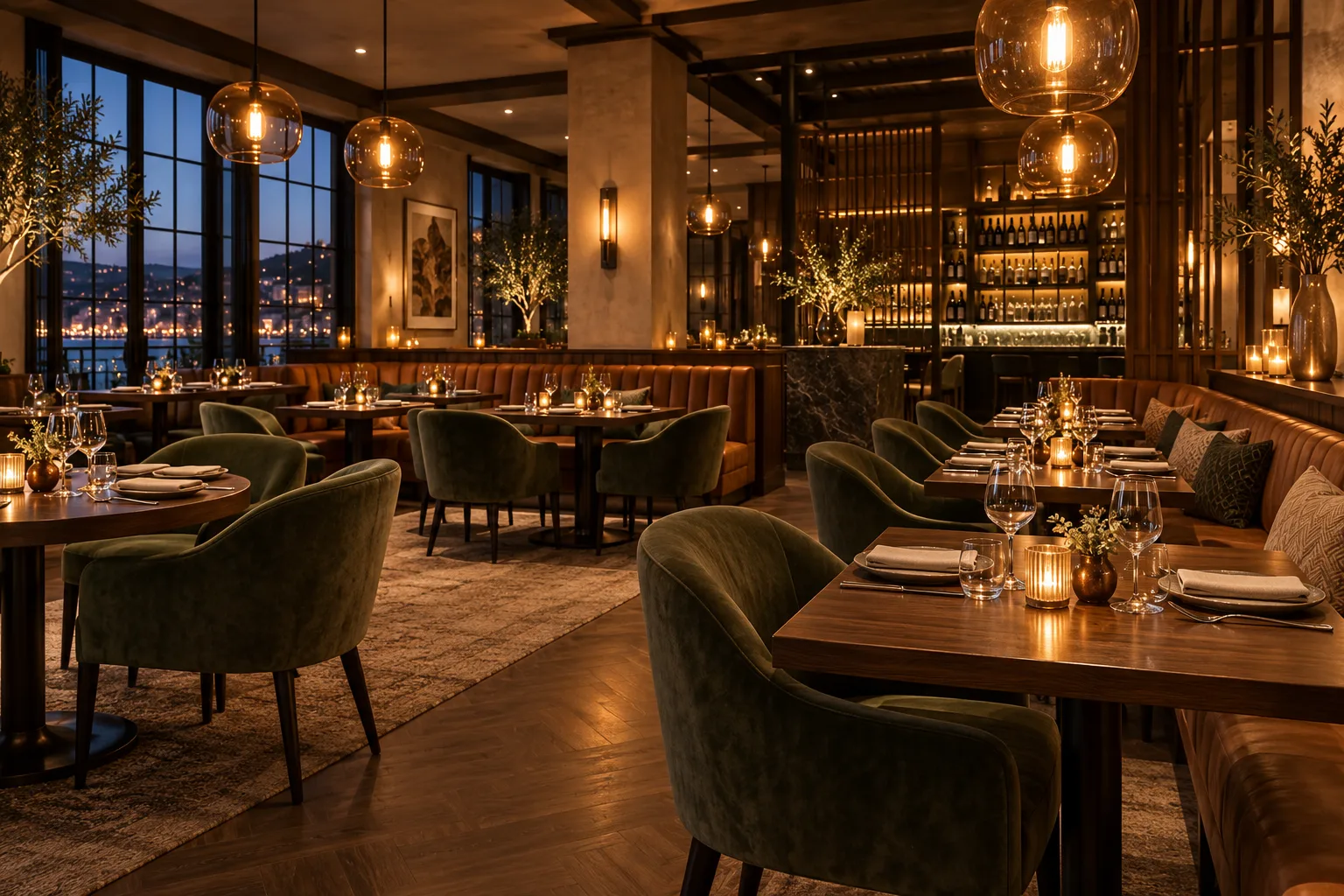
FF&E procurement means sourcing every movable item a building needs to operate — furniture, lighting, fixtures and equipment — as one coordinated package instead of a dozen separate purchases. Buying that package from China suits hotels, resorts, serviced apartments and whole-villa projects furnishing many rooms at once. It does not suit one-off retail purchases, and we will say so if that is what you need.
Demand is not the problem: the Middle East hotel construction pipeline alone hit a record 724 projects and 178,003 rooms in Q2 2026 (Lodging Econometrics), and China remains the world's largest furniture exporter. The hard part is buying well. This guide covers where FF&E stops and joinery begins, what the cost structure really looks like — with current freight and tariff numbers — where projects go wrong, and how a consolidated package runs in practice.
Key takeaways
- FF&E covers the movable items; kitchens, wardrobes and doors are joinery — most procurement companies handle only one side, and the gap between the two is where projects break.
- Freight and duties now move the maths more than factory price: a 40ft container to Northern Europe runs about $3,400 versus over $7,700 to the US West Coast, and Chinese furniture entering the US carries stacked tariffs of 25–50% — while the EU and GCC stay in low single digits.
- When one factory group runs FF&E and joinery together, the whole package ships on one schedule in one consolidated container with one room-by-room packing list.
What FF&E covers — and where it stops
FF&E — furniture, fixtures and equipment — is everything movable that makes a property operational: beds, sofas, case goods, dining sets, lighting, mirrors, sanitary fittings, curtains and décor. Its sister category, OS&E (operating supplies and equipment), covers the consumables: tableware, linen, guest amenities.
What FF&E does not cover is joinery — the fixed millwork: kitchen cabinets, wardrobes, interior doors, wall panelling, stone worktops. And here is the gap most buyers discover too late: a typical FF&E procurement company quotes the movable items and hands the joinery back to you. You end up coordinating two supply chains that were designed as one interior.
A factory group that manufactures both sides closes that gap. The wardrobe carcass and the bedside table come from the same finish schedule, ship in the same container, and answer to the same quality file.
The cost structure of an FF&E package from China
There is no catalogue price for an FF&E package, and you should distrust anyone who offers one. The real cost drivers are:
1. Product tier. The same hotel chair exists at three price levels depending on frame timber, foam density and fabric grade. Tier selection is a specification decision, not a negotiation. For hospitality use, specify foam at 40–45 kg/m³ and upholstery at 100,000+ Martindale rubs — residential-grade 28–32 kg/m³ foam degrades visibly within the first hotel season.
2. Quantity per item. Eighty identical bedside tables price very differently from eighty unique ones. Repetition is your friend.
3. Customisation. Standard sizes ride existing production lines; bespoke dimensions add engineering and setup time.
4. Packing and freight. Freight is now a first-order cost, not an afterthought: as of 1 October 2026, Drewry's World Container Index assessed Shanghai–Rotterdam at $3,399 per 40ft and Shanghai–Los Angeles at roughly $7,700 per 40ft (composite index $4,434). Export-grade packing and intelligent container loading decide how much product rides inside that box — they move the landed cost more than most buyers expect.
5. Duties and local compliance. This is where destination changes everything. Chinese furniture entering the US stacks: a low MFN base duty (most furniture headings are duty-free), the 25% Section 301 tariff, and — since 2025 — Section 232 duties of 25% on upholstered wooden furniture and kitchen cabinets, with increases to 30% and 50% respectively announced for January 2027; anti-dumping orders on wooden bedroom furniture run far higher. Verify your exact heading in the official USITC tariff database. The EU applies only low single-digit MFN duties on most furniture headings (check EU TARIC), and the GCC common external tariff is 5% — which is why the landed-cost case for China sourcing is strongest for Middle East and European projects.
We quote in USD, itemised line by line against your room schedule, so you can compare our landed cost against any local or third-country quotation. Clients who consolidated whole-home packages with us typically report landed costs 25–40% below buying the same scope in Europe — but the honest answer for your project is in the line items, not in an average.
Want the real numbers for your project? Send your room schedule and we return a line-by-line landed-cost quotation within one working day:
One supplier vs five: what consolidation actually changes
Buying FF&E from five factories means five production schedules, five partial shipments, five document sets — and a freight bill that punishes every half-empty container. At $3,400–$7,700 per 40ft depending on the lane, one well-planned consolidated container instead of two half-empty ones is worth more than most price negotiations.
Consolidation changes the economics, not just the logistics: one shared production schedule against a single shipping date, one container plan with protective packing, one packing list organised room by room so your receiving team unloads by room, not by supplier.
Compliance is a market-by-market question
The same chair is legal in one market and unsellable in another. Before you sign a purchase order, map the package against your destination's rules:
1. United States. CARB Phase 2 / EPA TSCA Title VI formaldehyde compliance is federally mandatory for anything containing composite wood (MDF, particleboard, plywood) — verify in the EPA registry, not from a factory PDF. California TB 117-2013 smoulder resistance is the de facto national standard for upholstery. For contract use, ANSI/BIFMA X5-series structural testing is what hotel procurement teams ask for.
2. United Kingdom. Contract upholstery must meet BS 7176, and mattresses in hospitality BS 7177 — both are routinely checked on hotel projects.
3. European Union. REACH applies to chemicals in finishes, foams and textiles — request an SVHC declaration. Seating strength and durability sit under the EN 12520 / EN 1728 series.
4. Saudi Arabia and the GCC. Products ship under SASO technical regulations with SABER platform registration — your coordinator should confirm which product certificates each category needs before production, not at the port.
None of this is exotic — but every one of these checks is cheaper before the container sails.
Where FF&E projects go wrong
Most FF&E failures are not quality failures — they are coordination failures. The four we see most often:
1. Dimensions that ignore local standards. Bed sizes, counter heights and electrical fittings differ by market. A package specified off a generic catalogue arrives technically perfect and practically wrong.
2. Finish drift across batches. Fabric ordered in January and re-ordered in June ships in visibly different dye lots. Every finish in our packages is locked against a physical sample before production.
3. Packing that was not export-grade. A sofa that survives a domestic truck ride does not survive six weeks at sea plus two port handlings. Packing spec belongs in the purchase order, not in an assumption.
4. An accountability vacuum at installation. Most FF&E suppliers — us included, unless separately agreed — supply, pack and ship while your local team installs. Decide who owns installation before the order, not when the container lands.
A fifth failure is skipping independent verification. Third-party inspection in China is cheap insurance — current rate cards run roughly $150–$350 per inspector-day (QIMA, Bureau Veritas, SGS) — a rounding error against a container's value. We welcome SGS, BV and TÜV inspections arranged by you.
How a George Group FF&E package runs
George Group was founded in Foshan in 2006 — twenty years, 10,000+ projects delivered across 50+ countries, with a 30,000 m² showroom open by appointment. Because we manufacture across categories — furniture, lighting, bathroom and sanitary ware and the fixed joinery alongside them — a package runs like this:
1. You send the room schedule, BOQ or the designer's spec book. Our design team returns space planning, 3D references and an itemised quotation.
2. Physical samples before production. Fabric swatches, finish panels and hardware couriered to you — product images alone are never the final approval.
3. One production schedule. Every category starts and finishes against the same shipping date, with photo and video records at raw-material, production and pre-assembly stages.
4. Pre-shipment inspection with a room-by-room packing list, then container loading photos — you see exactly what left the factory. Third-party inspection (SGS, BV, TÜV) arranged by you is welcome.
If you want to walk the product first, the Foshan showroom is open by appointment — we will help with the schedule.
FF&E procurement checklist
Before you request quotations — ours or anyone's — have these ready:
1. A room schedule with quantities. Rooms × items × units is the minimum viable brief.
2. Dimensions and local standards for your market — bed sizes, voltages, and the compliance list above: TSCA Title VI and TB 117-2013 for the US, BS 7176/7177 for UK contract work, REACH/EN 12520 for the EU, SASO/SABER for Saudi Arabia.
3. A finish schedule you are prepared to approve by physical sample, not by screen — with foam density and Martindale ratings written into the purchase order.
4. A packing and labelling spec — room-by-room labels save days at receiving.
5. A named owner for installation on your side.
6. An inspection plan — the supplier's own records, third-party inspection ($150–$350 per inspector-day), or both.
7. A landed-cost comparison, line by line, in one currency — freight at current index rates and duties for your exact HS headings included. We quote in USD; compare like with like.
Send your room schedule or spec book — a coordinator replies with an itemised quotation and a production schedule within one working day:
Questions importers ask us first
Straight answers on minimum orders, lead times, shipping and payment — before you commit.
Ivana Li
Senior Sales Director
Ten years focused on the global furniture and building-materials market, with deep project experience — you speak to her directly on WhatsApp.
Replies within one working day
Still have a question?
Send your list and get a costed, itemised answer — no obligation, no sales pressure.
What is the difference between FF&E and OS&E?
FF&E covers the durable movable items — furniture, lighting, fixtures and equipment. OS&E covers operating supplies and consumables: tableware, linen, towels, guest amenities. We supply FF&E; OS&E is typically sourced separately, though we can advise on both.
What is the minimum order for an FF&E package from China?
There is no fixed per-item MOQ when items ship together in a consolidated container. A package furnishing multiple rooms — a hotel floor, a serviced-apartment block, a whole villa — is where the economics work best.
How long does an FF&E package take?
Typical production runs 35–55 days depending on categories and finishes, plus sea freight to your port. Your coordinator confirms a per-project schedule in writing before you pay any deposit.
What certifications apply to hotel furniture in my market?
It depends on the destination: TSCA Title VI (formaldehyde) and TB 117-2013 (upholstery flammability) for the US, BS 7176/7177 for UK contract projects, REACH and EN 12520/1728 for the EU, and SASO technical regulations with SABER registration for Saudi Arabia. [Bathroom and sanitary ware](/products/bathroom-sanitary/) carries its own market-specific approvals — tell your coordinator the destination market and we will map which certificates each category in your package needs.
Can you work from our designer's FF&E spec book?
Yes — that is the normal way we work. Send the spec book, floor plans or BOQ, and the design team returns space planning, 3D references and an itemised quotation against it.
Who is George Group?
A factory group founded in Foshan in 2006 — twenty years, 10,000+ projects delivered across 50+ countries, and a 30,000 m² showroom open by appointment. We manufacture across every whole-home category: kitchen cabinets, wardrobes, doors and windows, stone, tiles, bathrooms, lighting and furniture — which is why an FF&E package and the joinery beside it can come from one schedule and one quality file.
How do payments work?
A deposit starts production; the balance is due after pre-shipment inspection, when you have the photo records, packing list and container loading evidence in hand. Exact terms are confirmed in writing per project before you commit — no surprises after the deposit.
Do you arrange shipping to my port?
Yes. We consolidate the package, load the container and ship to your destination port with one document set — or hand over to your own forwarder if you prefer. Freight is quoted at current market rates, and the landed-cost comparison in your quotation already includes it.